All Articles

    Beyond Modernism - Vernacular Use(s) of Hansaviertel

    MA Design Studio

    Teaching

    We will deepen our understanding of the so-called “existing” – a fertile ground for every project. Alongside historical research, planning, and market analysis to grasp the context, we will conduct intensive fieldwork in order to: 1) understand the site in its materiality, immaterial dimensions, and ontology, and 2) make conscious and well argued decisions regarding how the design project engages with the existing. This reflexion will be supported by readings on philosophy of the vernacular, new materialism and critical heritage.
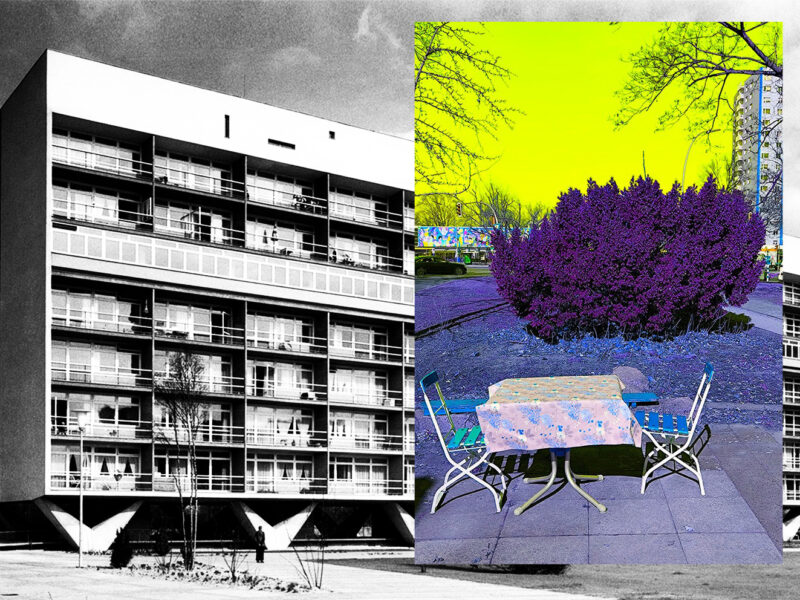
    Hansaviertel and its surroundings (IBA 57, the northern historic quarter, and northwest of Tiergarten) will serve as our field of inquiry. This heritage site is, in many respects, a true palimpsest. Successively a hunting reserve, a mundane fragment of the city, a field of ruins, and later the site of an international architectural exhibition, it has not undergone major physical transformation for nearly seventy years. Life has settled between memory, modernist heritage, and everydayness. People inhabit and continue to transform the place through the sedimentation of traces of their uses – in both material and immaterial forms.
    Within this context, we will ask: what should be preserved, transformed, or erased to make space for the vernacular practice within a site strongly marked by institutional transformation and market forces? To address this question, we will rely on the tensions between three positions toward history: monumental, antiquarian and critical.

    PiV offered by Fachgebiet Bildende Kunst:
    In connection with the studio Beyond Modernism – Vernacular use(s) in Hansaviertel, an artistic research project using the medium of film will be conducted.
    Intertwining archival images with footage captured on site during fieldwork, this research will constitute a pivotal moment within the studio, during which design project ideas will be developed between analysis and speculation through narratives that engage with the materiality of the site and the everyday practices of its inhabitants.

    Team: Prof. Jörg Stollmann / WiMi Jeanne Lacour

    IfA EXPO 2026

    Seminar SS26

    Teaching

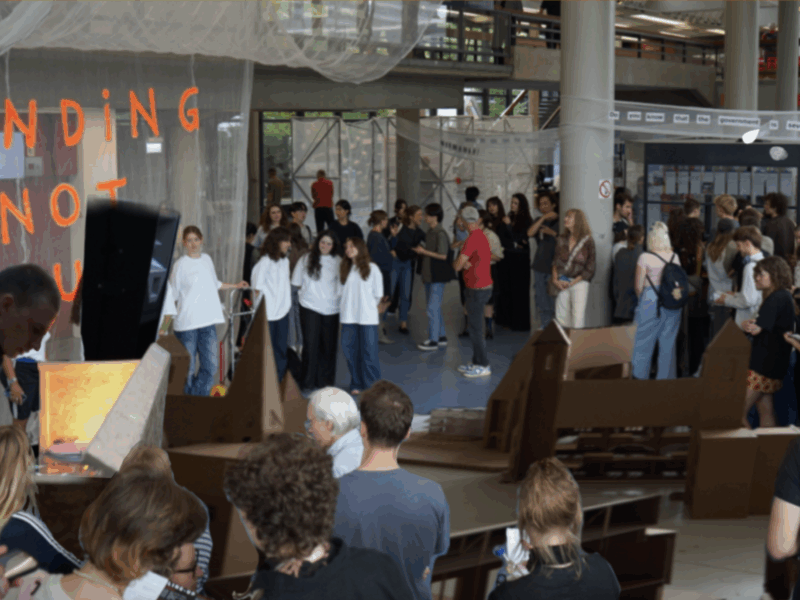
    This year, the IfA Expo returns as the annual exhibition of student work, bringing together all departments of the institute. Through the exhibition, we aim to create a platform where students present their projects and gain insight into the diverse work developed across our institute. The exhibition opens a shared space to explore design, research, and experimentation, inviting visitors to immerse themselves in the many fields that shape architecture at the IfA. The exhibition weekend concludes with a summer gathering that brings together students, teachers, and guests to reflect on and celebrate the semester.

    Team: IfA Kollektiv & Prof. Jörg Stollman

    Is Typology a Scam?

    Seminar SS26

    Teaching

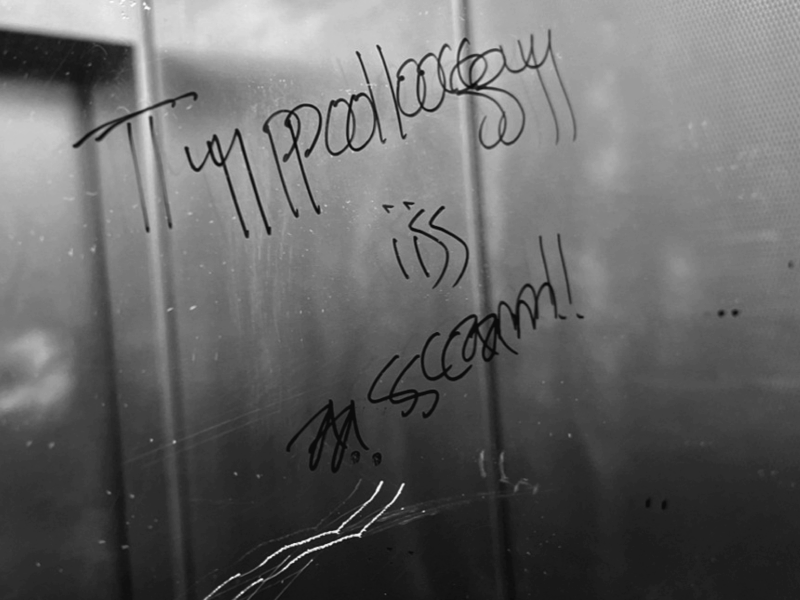
    This semester, the seminar wants to reflect not only on types and their appropriation and transformation, but on typology as such and the way typolegical thinking is taught, theorized, and developed in the Master Architecture Typology program and beyond. We will ask: “If and how typological thinking as it is taught in the M-Arch-T affeets our thinking about architecture and our future potential practice.”

    Team: Prof. Jörg Stollmann, Beyza Uysal, Tomás Martínez

    Mapping Through the Looking Glass

    Seminar SS26

    Teaching

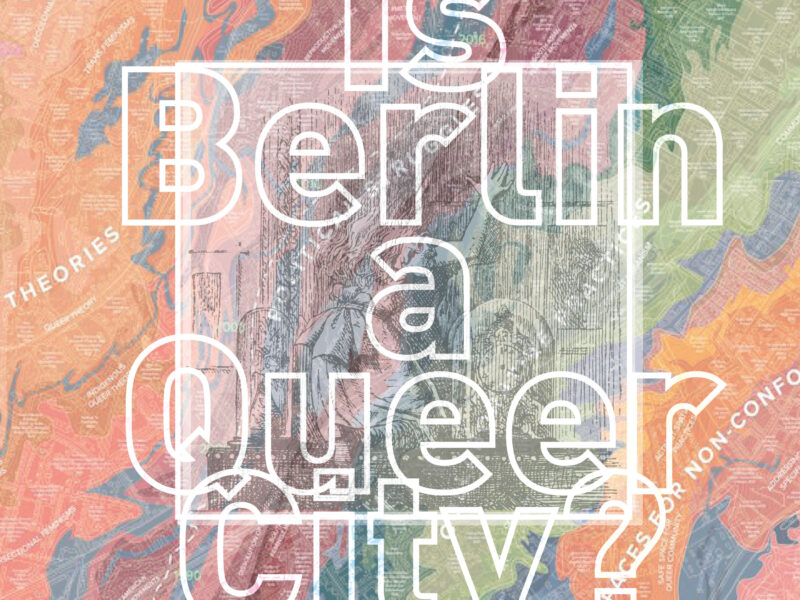
    Berlin is widely regarded as one of the queer capitals of the world. Maps produced by the City of Berlin or by Siegessäule reinforce this claim through the marking of the city’s milestones. These spatial representations of queerness are largely oriented toward the tourism industry and function as a form of urban branding that caters to market demands. As such, they often carry ambiguous political meanings for queerness, serving neoliberal regimes of spatial production while reinforcing forms of homonormativity. Queerness today can be understood through tensions between the “neoliberal queers” of the present and the radical queer movements of the past. These positions frequently exist in conflict and contradiction rather than within a single coherent queer space. Such fractures can already be observed in Berlin itself: in the existence of two pride parades, in the contrasts between lesbian and gay housing projects, and in the spatial tensions between queer centers and anti-queer peripheries.
    This seminar aims to address the complexities of queer representation in a more conflictual yet intersectional manner. Its objective is to investigate how urban domains such as housing, leisure, labor, public space, nature, culture, and infrastructures of care might be presented as queer counterparts to normative spatial orders, and to examine the spatial and systemic forces that enable or constrain these processes. In this sense, the seminar employs research methods and various forms of mapping in order to produce a publication that questions the dominant narratives often reproduced by existing “queer maps” of Berlin and instead asks a broader question: Is Berlin a queer city?

    Team: Prof. Jörg Stollmann, Veljko Marković

    Colloquia & Office Hours

    SS 26

    Teaching

    OFFICE HOURS
    1_Fr 24.04. – 9.30-11.30 presence/hybrid
    2_Fr 22.05. – 9.30-11.30 online
    3_Fr 19.06. – 9.30-11.30 presence/hybrid
    4_Fr 10.07. – 9.30-11.30 presence/hybrid

    MASTER COLLOQUIUM
    1_Thur 16.04. – 16.00-18.00 presence/hybrid
    2_Thur 07.05. – 16.00-18.00 presence/hybrid
    3_Wed 03.06. – 16.00-18.00 presence/hybrid
    4_Thur 18.06. – 16.00-18.00 presence/hybrid
    5_Thur 09.07. – 16.00-18.00 presence/hybrid

    PHD COLLOQUIUM
    1_Tue 12.05. 9.30-11.30 online
    2_Tue 09.06. 9.30-11.30 online
    3_Tue 30.06. 9.30-11.30 online
    4_Tue 04.08. 9.30-11.30 online

    To attend the office hours, please book your individual appointment via DFN Terminplaner.

    For „(online)“, please use Zoom link.