Articles in this Section

    DAAD/CAPES – PROBRAL Phase 1

    Planetability

    Research

    Integrating Planetary Health and Multispecies Cohabitation in Urban Design and Research
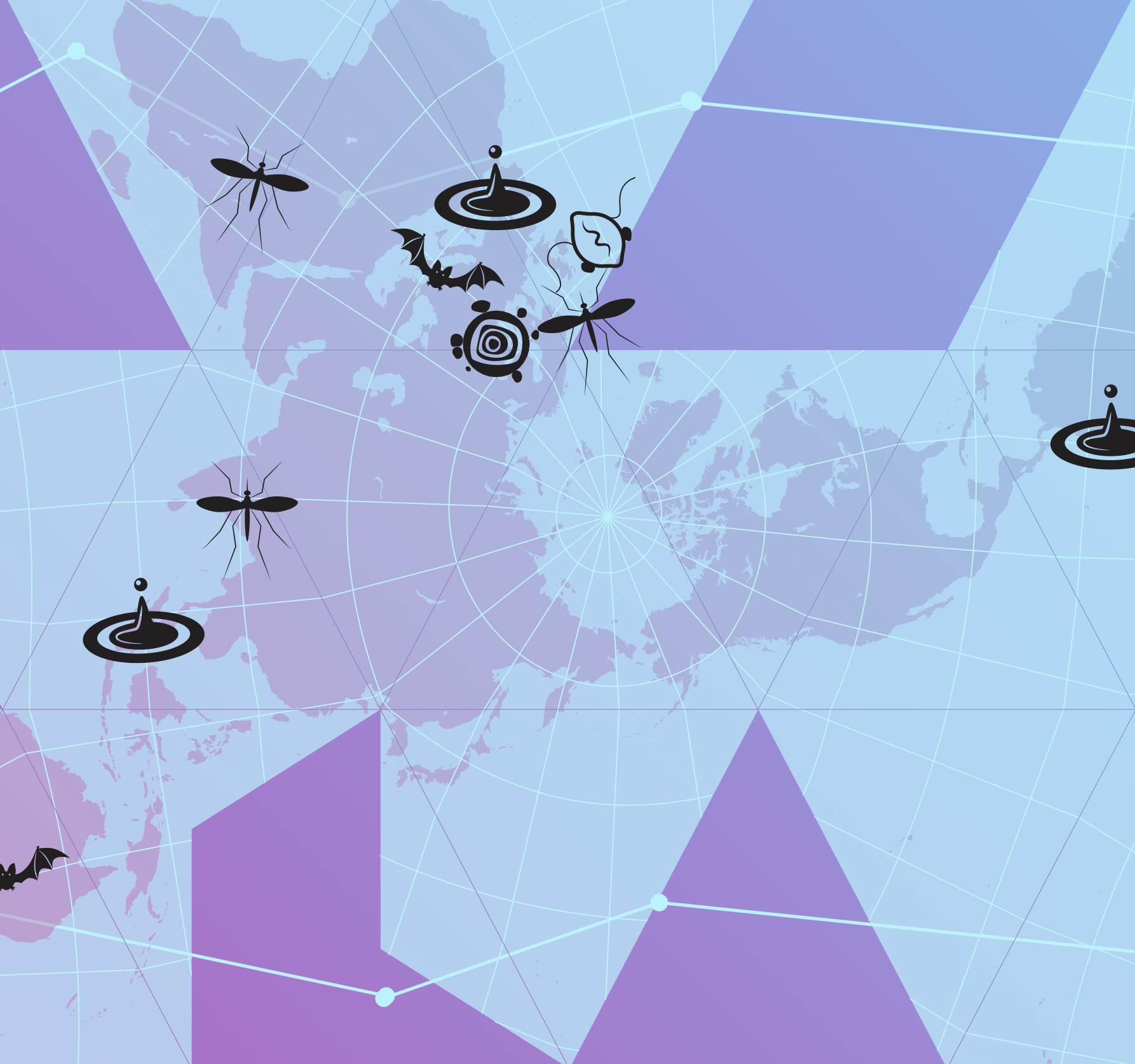
    Building on the foundations laid in phase 1, the follow-up project “Planetability: Integrating Planetary Health and Multispecies Cohabitation in Urban Design and Research (Phase 2)” continues to develop a robust interdisciplinary network of junior and senior scientists from Brazil and Germany cutting across the life, engineering, social, and spatial sciences. Collectively, our aim is to advance and promote a new research and action field that we call “planetability”. This combines three overlapping and interlinked dimensions: planetary health, planetary thinking, and planetary transformations, where each dimension fills a gap and enriches the others. For example, the emerging field of planetary health, which is well-represented in contemporary Brazilian debates and emphasises the interconnection of human and environmental health under climate change, is complemented by advanced critical theoretical work on multispecies cohabitation and contemporary urban and spatial theory currently being developed in Berlin – we refer to this as planetary thinking. The uniqueness of our approach empirically considers the social and spatial transformation of fragmented urban natures through the theoretical and methodological lens of human and nonhuman health relations. In global health research, the category of “environment” is all too often reduced to a determinant of human health. In our framework, the environment is opened up to reveal the multiple species and their health relations, eff ects, and outcomes that constitute it; in this way, we place human and nonhuman health on equal footing in the constitution of urban nature space. Our approach can be thought of as trans-scalar, which means we aim to examine how the planetary is inscribed into specific urban sites and therefore, how urban places, subjects, and communities, understood from the perspective of their multispecies urban health relations, are interlinked across the planet. In this way, our research is comparative, in that it seeks out the diff erences, connectivities, and shared histories between unevenly urbanised transatlantic spaces in Germany, São Paulo, and Porto Alegre. Our primary goal in phase two is to advance this mission by consolidating binational relations, supporting junior scientists develop research findings, and submitting a high-value international research proposal.

    PI
    Dr. Jamie Scott Baxter

    DAAD/CAPES Fund 2024-2025

    SFB 1265 Re-Figuration of Spaces, Phase 3

    B03 Multiple Encapsulations

    Research

    Gated Communities, Artistic Enclaves and Child-free Spaces

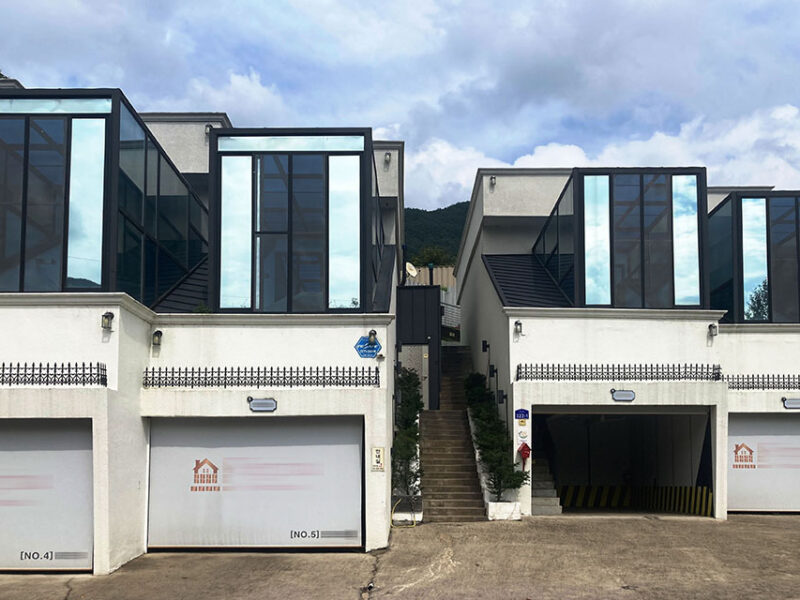
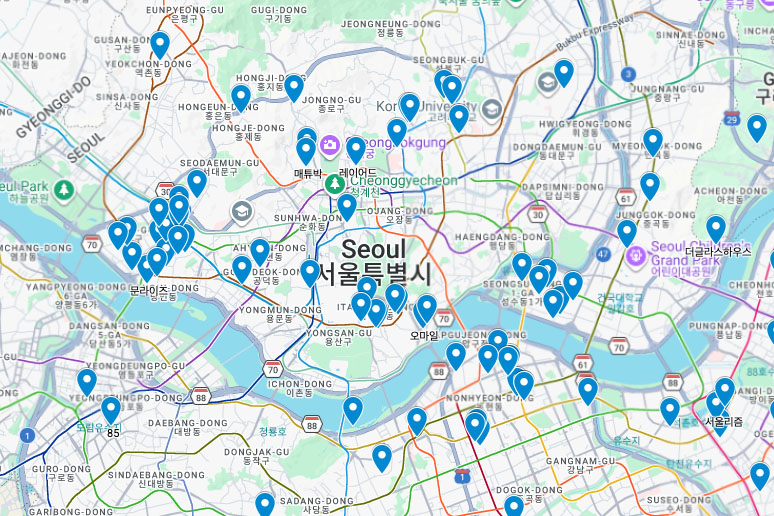
    In the first funding phase of the CRC 1265, subproject B03 investigated the refiguration of spaces using the Korean smart city Songdo as a case study. It became evident that refiguration there results in homo-geneous settlement forms and a digitalization concept geared towards the interests of the middle class. In the second funding phase, it was possible to show how the implementation of this urban apartment housing policy as a spatial form of refiguration also gives rise to protest movements and alternative, queer ways of living. In both funding phases, we observed strategies of encapsulation of the groups un-der study within digitally controlled special spaces, staged through thresholds. These encapsulations os-tensibly aim to increase security and reduce complexity. In the third funding phase, we pursue the goal of synthesizing and generalizing our findings. We ask how built-spatial and social structures of encapsulation contribute both to processing refiguration and to driving it further in the form of social polarization. This also raises the question of the porosity of these capsules, first through digital networking and, second, through services. In addition to secondary analyses of existing data and cross-sectional analyses across various subprojects within the CRC, in-depth studies will be conducted in South Korea on two phenomena: the establishment of child-free public spaces in Korean cities, and the promotion of artist settlements in peripheral villages. The project’s long-term study of the development of gated communities in South Ko-rea will also be continued during the third phase. By examining different as well as similar forms of en-capsulation, we expect to gain insights into their conditions of emergence, the nature of their material-digital thresholds, and their relevance. Furthermore, relational studies are planned in Brazil and Switzer-land. The subproject combines urban design and sociological methods, employing participant observati-on, hybrid mapping, and semi-structured interviews.

    DFG Fund, 2026-2029

    PI

    Prof. Jörg Stollmann, Technische Universität Berlin, Institut für Architektur / Prof. Dr. Martina Löw, Technische Universität Berlin, Institut für Soziologie

    Project Staff

    Jae-Young Fröhlich-Lee
    Sangwon Chae

    Student Staff

    Ara Song

    Former Project Staff

    Dr. Sung Un Gang
    Dr. Timothy Pape
    Dr. Dominik Bartmanski
    Seonju Kim
    Kayoon Kim
    Adi Cohen
    Yong-Ha Kim

    Photo Credits:
    Luxury gated residency in a rural area in South Korea, © Jae-Young Lee-Frölich
    “YesNo Kidzone Map”, public Google map made by an anonymous user (Screenshot)

    SFB 1265 Re-Figuration of Spaces, Phase 3

    A07 Space of Nature

    Research

    Conflicts over Botanical Knowledge in the Case of (Trans)Atlantic Rainforests (Brazil and Great Britain)

    Subproject A07 investigates conflicts surrounding knowledge about biodiversity conservation against the backdrop of the dramatic increase in the extinction of non-human life on Earth. As a paradigmatic modernist regime that has historically determined the spatial organization of humans and non-human entities, conservation has been massively destabilized since the 1960s by contemporary forces, changing climatic conditions, efforts to decolonize (knowledge) and developments in digitalized biotechnology.

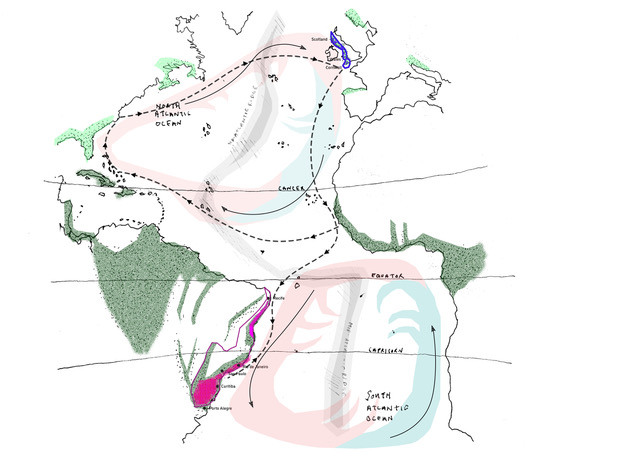
    The subproject adopts a spatial perspective on this existential planetary problem, examining the refiguration of spaces in relation to the fragmented transatlantic forests stretching along the Atlantic Ocean coastline, which has been shaped by imperialism and colonial expansion, and examines the refiguration of spaces in this context. Using an interdisciplinary design research approach that bridges sociology and architecture and combines multi-sited ethnography with expert interviews and hybrid mapping, the subproject explores how transatlantic forests and the subjectivities of nature custodians (including park rangers, Indigenous Guaraní leaders, and IUCN staff) are co-constituted within spatial conflicts over conservation knowledge. Taking Brazil and the United Kingdom as case studies, this research project asks: Which knowledge conflicts challenge the stability of the modern conservation regime, and what effect do these conflicts have on the ongoing co-constitution of spaces of nature and the subjectivities of nature custodians in transatlantic forests?

    The problem of biodiversity loss not only raises the question of the significance of biological knowledge for conservation but also highlights a socio-political and spatial issue – namely, the struggle over who determines how human and non-human life on the planet is spatially ordered and reorganized. By investigating the spatialization of conflicts within conservation regimes, the subproject aims to reveal how botanical knowledge is materialized and reproduced within spaces of nature. Overall, the project intends to capture processes of spatial refiguration in which hegemonic epistemologies of the Global North are being challenged by more diverse forms of knowledge (e.g. local, traditional, subaltern, and artisanal forms).

    PI
    Dr. Jamie-Scott Baxter
    Dr. Séverine Marguin, Technische Universität Berlin, Institut für Soziologie

    DFG Fund, 2026-2029

    Student Staff
    Maria Leticia Bordignon Fogaca

    DAAD/CAPES – PROBRAL Phase 2

    Planetability

    Research

    Integrating Planetary Health and Multispecies Cohabitation in Urban Design and Research
    Building on the foundations laid in phase 1, the follow-up project “Planetability: Integrating Planetary Health and Multispecies Cohabitation in Urban Design and Research (Phase 2)” continues to develop a robust interdisciplinary network of junior and senior scientists from Brazil and Germany cutting across the life, engineering, social, and spatial sciences. Collectively, our aim is to advance and promote a new research and action field that we call “planetability”. This combines three overlapping and interlinked dimensions: planetary health, planetary thinking, and planetary transformations, where each dimension fills a gap and enriches the others. For example, the emerging field of planetary health, which is well-represented in contemporary Brazilian debates and emphasises the interconnection of human and environmental health under climate change, is complemented by advanced critical theoretical work on multispecies cohabitation and contemporary urban and spatial theory currently being developed in Berlin – we refer to this as planetary thinking. The uniqueness of our approach empirically considers the social and spatial transformation of fragmented urban natures through the theoretical and methodological lens of human and nonhuman health relations. In global health research, the category of “environment” is all too often reduced to a determinant of human health. In our framework, the environment is opened up to reveal the multiple species and their health relations, eff ects, and outcomes that constitute it; in this way, we place human and nonhuman health on equal footing in the constitution of urban nature space. Our approach can be thought of as trans-scalar, which means we aim to examine how the planetary is inscribed into specific urban sites and therefore, how urban places, subjects, and communities, understood from the perspective of their multispecies urban health relations, are interlinked across the planet. In this way, our research is comparative, in that it seeks out the diff erences, connectivities, and shared histories between unevenly urbanised transatlantic spaces in Germany, São Paulo, and Porto Alegre. Our primary goal in phase two is to advance this mission by consolidating binational relations, supporting junior scientists develop research findings, and submitting a high-value international research proposal.

    PI
    Prof. Jörg Stollmann
    Prof. Dr. Jamie Scott Baxter

    DAAD/CAPES Fund 2026-2027

    SFB 1265 Re-Figuration of Spaces, Phase 2

    B03 Smart People

    Research

    Queer Everyday Life in Digitalized Spaces

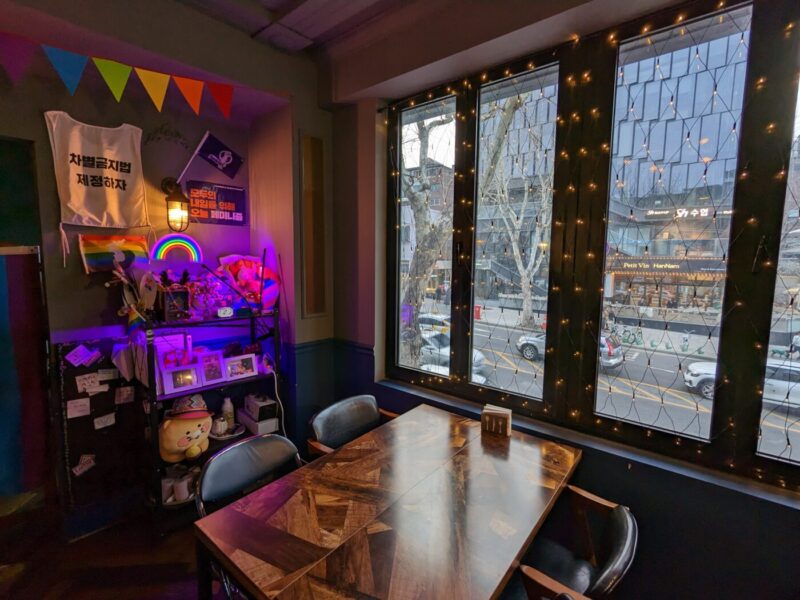
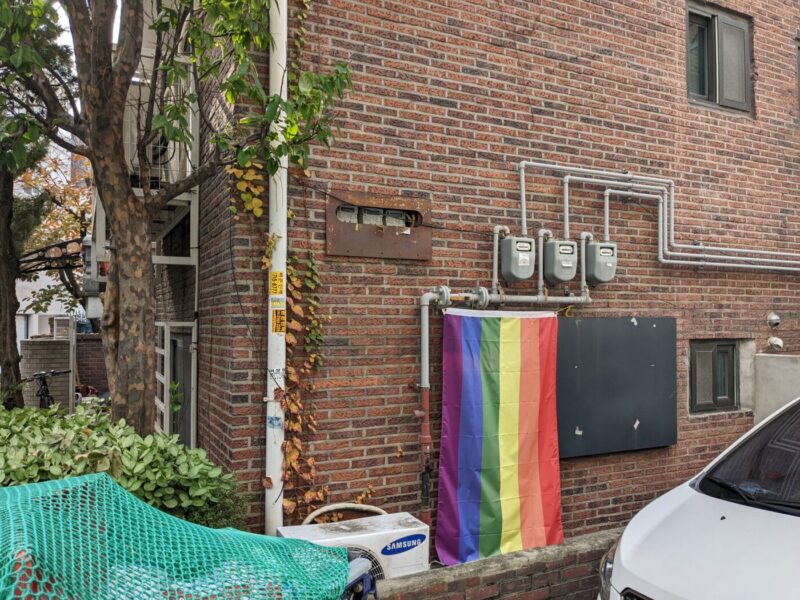
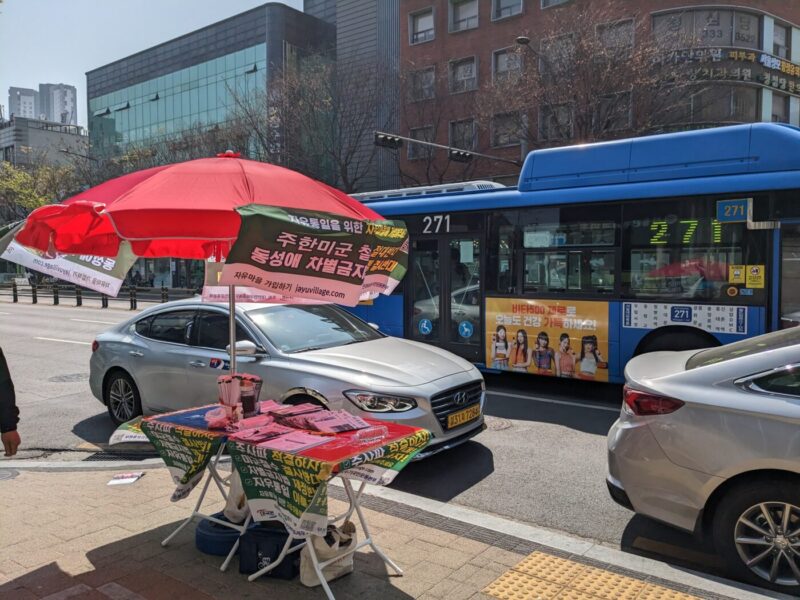
    In the first funding period, we investigated the refiguration of spaces in the context of South Korea’s smart city Songdo as large-scale real estate project. It could be shown that social tensions between locally rooted family values and an orientation towards the globalized market economy, which underlie much of the city’s everyday practices, are mediated by homogenous housing typologies as well as an extensive digitalization concept geared towards the interests of the Korean middle class. Given the obvious way in which South Korea’s smart city developments bolster nuclear family structures and leave aside social, cultural and ethnic differences, the second funding period will focus on the refiguration of spaces in highly digitalized South Korea specifically in relation to conflictual sociocultural placements. Since the 1990s, South Korea’s planning culture has increasingly attracted public criticism resulting in the formation of social movements calling for participatory modes of planning, greater ecological sustainability and a sensitive approach to renewal. South Korea has, moreover, witnessed a diversification of lifestyles, particularly in metropolitan regions. Especially the increased public visibility of LGBTIQ+ can be seen as unsettling the heteronormative and familial structures of South Korean society.

    The project will analyze digitalized, mediatized (inter)actions and practices in the context of queer subcultures and urban social movements. Data on the smart city project gathered during the first funding period will be put in relation to subcultural placements of queer and urban development movements in order for the CRC to gain a deeper insight into the emergence of multiple spatialities and processes of spatial refiguration in South Korea. A central research question will be: Which spatial figures are linked, relationally and dynamically, to what kind of of spatial logics, and what is the role of digitalization in these contexts? To this end, we have defined three work packages for analysis – 1. ethnographic field work focusing on spatial strategies of LGBTIQ+ communities in the greater Seoul area; 2. secondary analyses of interviews with Korean inhabitants of Songdo exploring social constructions of othering; and 3. expert interviews with key actors of urban social movements on conflictual productions of space.

    DFG Fund 2022-2025

    PI

    Prof. Jörg Stollmann, Technische Universität Berlin, Institut für Architektur / Prof. Dr. Martina Löw, Technische Universität Berlin, Institut für Soziologie

    Project Staff

    Dr. Sung Un Gang

    Student Staff

    Ara Song

    Former Project Staff

    Dr. Timothy Pape
    Dr. Dominik Bartmanski
    Seonju Kim
    Kayoon Kim
    Adi Cohen
    Yong-Ha Kim

    photos © Sung Un Gang

    C/O _______

    Forschen mit Kindern und Jugendlichen zur Wohnqualität in der Großwohnsiedlung | Researching housing quality in large housing estates with children and adolescents

    Research

    Forschen mit Kindern und Jugendlichen zur Wohnqualität in der Großwohnsiedlung

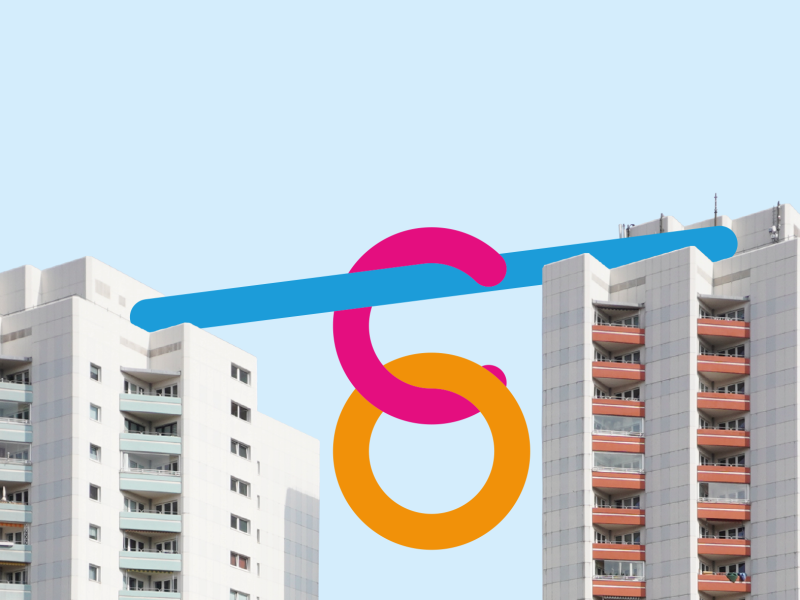
    Der steigende Wohnungsbedarf in Berlin erfordert rasche Neubauten. Wohngebiete verdichten sich. Großwohnsiedlungen scheinen nach einer langen Zeit der Kritik wieder eine Lösung für die Wohnungsfrage zu sein.

    Der aktuelle Handlungsdruck der Bestandshalter zu Neubau und Verdichtung birgt die Gefahr, dass die Planung nicht auf heutige gesellschaftliche Entwicklungen reagiert, an den Bedürfnissen der aktuellen und zukünftigen Bewohner*innen vorbeigeht und unterschätzte Qualitäten der Großwohnsiedlungen aushöhlt. Denn genaues Wissen über die tatsächlich erlebten Qualitäten in diesen Siedlungen ist bisher kaum vorhanden.

    Unter dem Titel „C/O _______“ untersucht das Forschungsprojekt deshalb gemeinsam mit jungen Menschen in Berlin Neu-Hohenschönhausen, was die Wohnrealitäten, und damit auch -qualitäten, der Menschen in Großwohnsiedlungen ausmacht. C/O _______ bietet die Möglichkeit, den Wohnraum auch über den Raum der Wohnung hinaus zu denken und den Netzwerkraum des Wohnalltags junger Menschen in den Blick zu nehmen. Mit verschiedenen Formaten kokreativer Foschung und Wissenschaftkommunikation dockt das Projekt mit seiner flexiblen Struktur – C/O _______ – an bestehende Einrichtungen jugendlicher Daseinsvorsorge an.


    The increasing demand for housing in Berlin requires rapid new construction. Residential areas are becoming denser. After a long period of critique, large housing estates now seem to be a solution to the housing issue once again.

    The current pressure from existing owners to build new housing and increase density harbors the danger that planning will not respond to today’s social developments, will bypass the needs of current and future residents, and will undermine the underestimated qualities of large housing estates. This is because precise knowledge about the qualities actually experienced in such housing estates has to date hardly been available.

    Under the title “C/O _______”, the research project is therefore investigating, together with young people in Berlin Neu-Hohenschönhausen, what constitutes the living realities, and thus also living qualities, experienced by people living in large housing estates. C/O _______ offers the opportunity to think about living space beyond the space of the apartment, and to take a look at the network space of young people’s everyday lives. With various formats of co-creative research and scientific communication, the project docks onto existing institutions for young people with its flexible structure – C/O _______ -.

    Projektleitung / Project Lead:  Prof. Dr. Kristin Wellner (pbi), Prof. Jörg Stollmann (CUD)

    Wissenschaftliche Mitarbeiter*innen / Researchers: Aylin Akyildiz, Karoline Fahl, Steffen Klotz

    Studentische Hilfskräfte / Student Assistance: Oscar Mehlitz, Soraya Wyssusek

    Förderung / Funding: Bundesministerium für Bildung und Forschung (BMBF)

    Förderbereich / Funding Area: Citizen Science/ Bürgerforschung
    Förderungszeitraum / Funding Period: 04/2021 – 03/2024

    Partner / Partners: Bezirksamt Lichtenberg, Gangway e.V., GEWOBA Aktiengesellschaft Wohnen und Bauen – Bremen, HUMBOLDT VIADRINA Governance Platform gGmbH, Kompetenzzentrum Großsiedlungen e.V., Senatsverwaltung Stadtentwicklung und Wohnen, Stiftung Stadtkultur der Wohnungsbaugesellschaft HOWOGE, Institut für Stadt- und Regionalplanung – TU Berlin, Verein für aktive Vielfalt e.V.

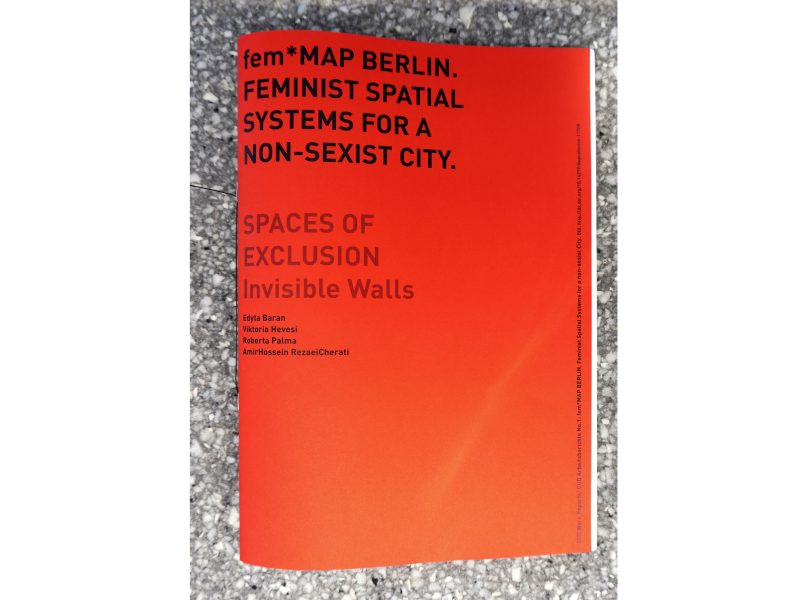
    Frau Architekt*in

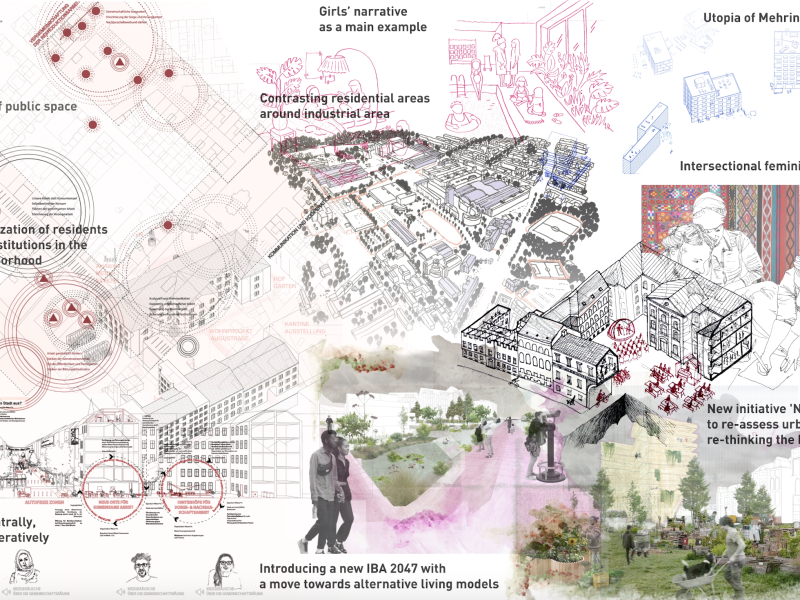
    fem*CITY Berlin – A feminist city of transformed fragments

    Research

    Anknüpfend an das Mapping-Seminar fem*MAP wurde im Rahmen des Entwurfsstudios fem*CITY eine feministische städtebauliche Perspektive ausgelotet. In Form veränderter Stadtfragmente auf sechs Testfeldern entlang der U6 vom Halleschen Tor bis Alt-Tegel wurde das transformative Potential einer feministischen Raumproduktion versuchsweise in die Gestaltung von Wohn- und Stadträumen übersetzt. Diese transformierten Stadtfragmente weben sich in die bestehende Stadtstruktur ein und formulieren eine Utopie im Jetzt.

    Lehrende: Prof. Jörg Stollmann, Julia Köpper, Asli Varol

    CUD Fachgebiet für Städtebau und Urbanisierung TU Berlin

    Student*innen fem*CITY

    Laura Alvarez, Elena Armbruster, Sophia Braun, Jara Decker, Paula Eggert, Matthias Letzner, Noha Elhady, Vanessa Markus, Claire MCQuillan, Solveigh Paulus, Janosch Pein, Karlis Ratnieks, Julia Ruggiero, Liliia Sabirova, André Sacharow, Tamar Sarkissian, Jann Wiegand, Marienne Wissmann


    Link zum Video 

    Bild: fem*CITY – a feminist city of transformed fragments, Liliia Sabirova & Karlis Rietniks

    Keeping it Modern

    A Conservation Management Plan for the Oberstufen-Schulzentrum Wedding

    Research

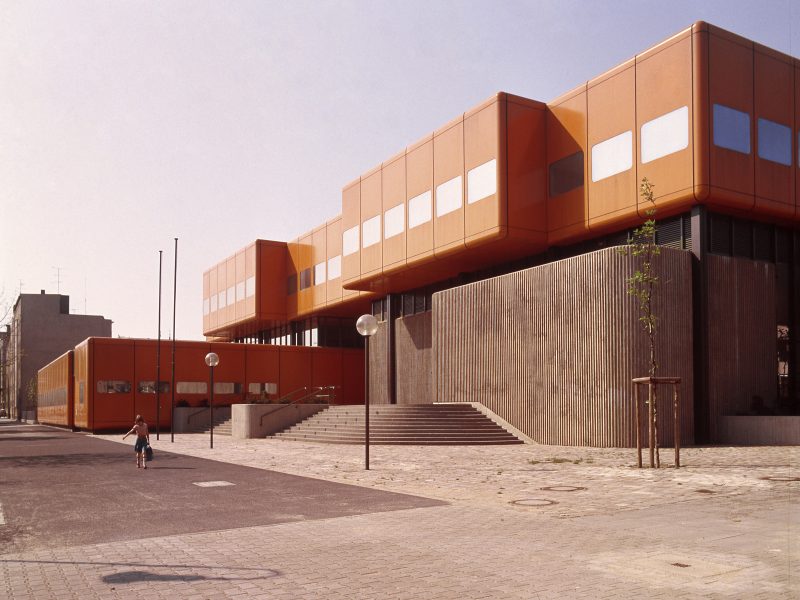
    Within the grant initiative “Keeping it Modern” the Chair for Urban Design and Urbanization receives funding from the Los Angeles-based Getty Foundation to develop a comprehensive conservation management plan for the Oberstufen-Schulzentrum (OSZ) Wedding.

    The OSZ Wedding was developed as a secondary school center according to the principles of education reform of the 1970s. Designed by the architects’ office Pysall, Jensen, Stahrenberg & Partner (since 1983: Pysall, Stahrenberg & Partner) the school building is located in Berlin’s Brunnenviertel, a former working class neighborhood that became the largest urban renewal area in Germany at that time. In 2011 the school was closed due to a declining number of students. Since then, the nonprofit organization ps wedding lobbied against the envisaged demolition of that paradigmatic building and for its reuse as an education campus and neighborhood center. In the autumn of 2019, the OSZ Wedding was finally listed as a historical monument.

    The building’s appearance with its bright orange panels is related to contemporary pop art design and recalls the architectural utopian architecture of Archigram and others. But beyond its formal invention, the school building embodied bold new steps in education and is an outstanding example in Germany’s 1970s educational reform. The spacious, horizontal layout reflects the school’s reformist goals to strip away class hierarchies, and surrounding community members were welcomed inside to use the school’s public library, the large auditorium as well as the adult-education facilities.

    The Getty grant will allow an interdisciplinary team of experts – conservation architects, cultural heritage experts, civil and structural engineers as well as educational specialists – to define a long-term comprehensive strategy of conservation, renovation, re-use and management of the school building. In order to achieve this overall objective, a conservation management plan will be developed that assesses the significance of both building and place to develop future policy guidelines. The project strives for a heritage practice that acts beyond purely material and aesthetic manifestations and takes into account the use, associations and meanings of places. It will therefore present a value-based approach to preservation and follow the philosophy and principles of the ICOMOS Australia Burra Charter.

    Team: Prof. Jörg Stollmann (spokesperson), Dipl. Ing. Oliver Clemens (lead conservation architect), Dr. Verena Pfeiffer-Klotz (secondary conservation architect), Dr. Sabine Horlitz (lead researcher), Dr. Felix Richter (secondary researcher), Dipl.-Ing. Asli Varol (participatory planning)

    Experts: Dipl.-Ing. Peter Sämann / Dipl.-Ing. Mike Füllgraebe (energy concepts), Dipl.-Ing. Axel Wichmann (building biology and environmental remediation)

    Advisory board: Prof. Dr. Angela Million (urban planning and educational landscapes), Dipl.-Ing. M. Eng. Barbara Pampe (participatory school planning), Katja Niggemeier (neighborhood planning), Prof. Dr. Kerstin Wittmann-Englert (architectural history, t.b.c.), Dr. Tom Holert (1970s school policies), Prof. Philipp Oswalt (architectural theory)

    Project Start: September 2020

    Spatial Commons

    Lehrforschungsformate zu räumlichen Gemeingütern der Stadt

    Research

    Die Beschäftigung mit den Gemeingütern, den elementaren natürlichen und kulturellen Ressourcen, die dem Wohle der Gemeinschaft dienen, fordert auch eine Auseinandersetzung mit Räumen. Denn die Frage nach der Verfügbarkeit von Ressourcen schließt die Frage nach dem Ort, an dem diese für die Gemeinschaft zugänglich sind oder zugänglich gemacht werden, und damit immer auch die Frage nach der räumlichen Organisation dieser Gemeinschaft, ein.

    Seit 2014 beschäftigt sich der CUD in verschiedenen Lehrforschungsformaten mit Fragestellungen zur Bedingtheit und Herstellungsweise von sowie Teilhabe an urbanen Räumen als Spatial Commons Aus der theoretischen, historischen und konzeptionellen Auseinandersetzung mit den räumlichen Gemeingütern der Stadt entstehen am Fachgebiet Kartierungen, Entwurfsprojekte, Publikationen, Masterarbeiten und Dissertationsprojekte, die sich mit verschiedenen Schwerpunkten auseinandersetzen. Die methodische Vertiefung der forscherischen Arbeitsweisen bildet einen zweiten Schwerpunkt im Lehrprogramm der Reihe. So werden urbane Freiräume als Ressource, nachbarschaftliche Gewerberäume als Orte des Gemeinschaffens, Modellprojekte selbstverwaltet kommunaler Raumproduktionen oder Regelwerke gemeinschaftlichen Wohnens als räumliche Gemeingüter untersucht, beschrieben und auf ihre Übertragbarkeit in Planung und Entwurf hin überprüft.

    SC1 / Reading Spatial Commons (SoSe 2014)

    SC2.1 / Selbstverwaltet Kommunal. Modellprojekte des Gemeinschaffens (in Koop mit der Initiative Stadt von Unten, WS 2014/15)

    SC2.2 / Die Allmende als urbaner Typus. Urbane Freiräume als Ressource (WS 2014/15)

    SC3.1 / Berliner Beteiligung. Eine kurze Geschichte des Scheiterns (SoSe 2015)

    SC3.2 / Die Mitte ist nicht leer! Gemeingut Leere (SoSe 2015)

    SC4 / Hin und weg vom Kiez. Gemeingut Nachbarschaft? (SoSe 2016)

    SC5 / Immer noch hin und weg vom Kiez. Gewerberäume als Orte des Gemeinschaffens  (in Koop mit Alice Salomon Hochschule Berlin und Familien- und Nachbarschaftszentrum Wrangelkiez, SoSe 2017)

    SC6 / Wohnhaft im Verborgenen. Codes und Conventions of Commoning (in Koop mit dem Fachgebiet Planungs- und Architektursoziologie TUB, WS 2017/18)

    SC7.1 / Institutionalizing Commoning (SoSe 2018)

    SC7.2 / Gemeingut Stadt Apparat (SoSe 2018)

    SC8 / Das Haus der Kulturen der Welt – in der Welt. Gemeingut Daten (in Koop mit dem SFB 1265 Re-Figuration von Räumen, TUB, WS 2018)

    SC9 / Liquid Properties. Wasserlagen neu verhandeln


    MedPlan

    Mediatisierungsprozesse in der städtebaulichen Planung und Veränderungen der öffentlichen Sphäre

    Research

    Die Einbindung von „neuen“ Medien lässt sich schon früh in städtebaulichen Planungsprozessen beobachten, angefangen von neuen Plantypen ab 1910 bis zu neuen Ausstellungsformen nach 1945. In den vergangenen Jahren hat dieser Prozess jedoch an Dynamik gewonnen, moderne Informations- und Kommunikationsmedien verändern die Planung von der Erstellung der Pläne bis zur Partizipation der Bevölkerung. Im Dezember 2015 hat das Bundesministerium für Verkehr und digitale Infrastruktur die Broschüre „Stufenplan Digitales Planen und Bauen“ herausgegeben, was die hohe Bedeutung digitaler Medien für das Planen unterstreicht.

    Im Projekt „MedPlan“ werden diese Vorgänge als „Mediatisierungen“ konzeptualisiert, also als Gestaltung von Kommunikationsprozessen durch die Nutzung von Medien. Die Beziehung zwischen den Planungsprozessen und den Medien ist dabei eine wechselseitige: Einerseits setzen Planer Medien bewusst als Instrumente ein, andererseits strukturieren die Medien die Kommunikationsprozesse so nachhaltig, dass nach der Auswirkung des Einsatzes „neuer“ Medien auf die Planungsprozesse gefragt werden muss: Welche Folgen haben neue informations- und kommunikationstechnische Möglichkeiten auf die räumliche Gestaltung in Städten? Wie lassen sich Mediatisierungen von Planungsprozessen in der Vergangenheit analysieren und die Erkenntnisse daraus für die Gestaltung gegenwärtiger Prozesse nutzen?

    Das Projekt wird gemeinsam von den IRS-Forschungsabteilungen „Kommunikations- und Wissensdynamiken im Raum“ und „Historische Forschungsstelle“ in Kooperation mit dem Fachgebiet für Städtebau und Urbanisierung an der Technischen Universität Berlin durchgeführt. Die beteiligten Wissenschaftlerinnen und Wissenschaftler bündeln somit Expertisen aus der Kommunikationssoziologie, Planungsforschung und Planungsgeschichte für einen interdisziplinären Forschungsansatz. Neben den wissenschaftlichen Betreuern im IRS (Prof. Dr. Gabriela Christmann, PD Dr. Christoph Bernhardt) sowie an der Technischen Universität Berlin (Prof. Dr. Jörg Stollmann) sind zudem drei renommierte internationale Experten in Großbritannien und den USA sowie drei Praxispartner aus Verwaltung und Planung assoziiert.

    Darüber hinaus ist „MedPlan“ ein Prototyp für eine innovative Form der Nachwuchsausbildung: Im Projekt arbeiten ein Postdoktorand und zwei Doktoranden gemeinsam in einer kleinen Projektgruppe an Fragen der anwendungsorientierten Grundlagenforschung. Der Postdoc hat mit der Projektleitung eine besondere Rolle, die auf den spezifischen Karriereweg zugeschnitten ist. Entlang individueller Karrierepläne erhalten die Nachwuchswissenschaftler profunde Erfahrungen in inter- und transdisziplinärer anwendungsorientierter Grundlagenforschung, Kontakte in die internationale Forscher-Community und die Praxis sowie Kompetenzen in Projektorganisation, Teamleitung, Lehre und Drittmittelbeantragung.

    Projekt Lead/ Projektleitung:  Prof. Dr. Gabriela Christmann (IRS), Prof. Dr. Christoph Bernhardt (IRS) & Prof. Jörg Stollmann (TU Berlin)
    Project Team/ Projektteam: Kathrin Meißner (IRS), Dr. Ajit Singh (IRS) & Mennatu Allah Hendawy (TU Berlin)
    Funding/ Förderung: Leibniz-Gemeinschaft
    Funding Period/ Förderungszeitraum: 04/2017 – 03/2020

    SFB 1265 Re-Figuration of Spaces, Phase 1

    B03 Smart Cities

    Research

    Everyday Life in Digitalized Spaces
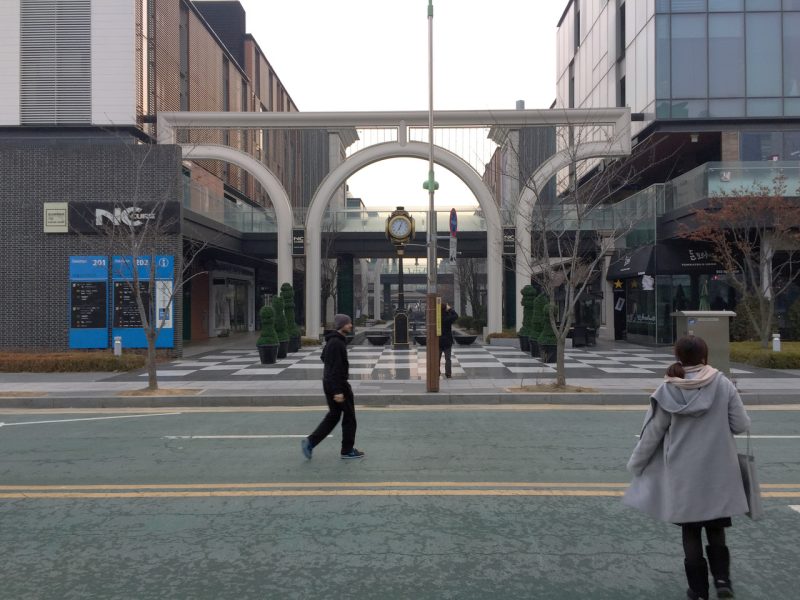
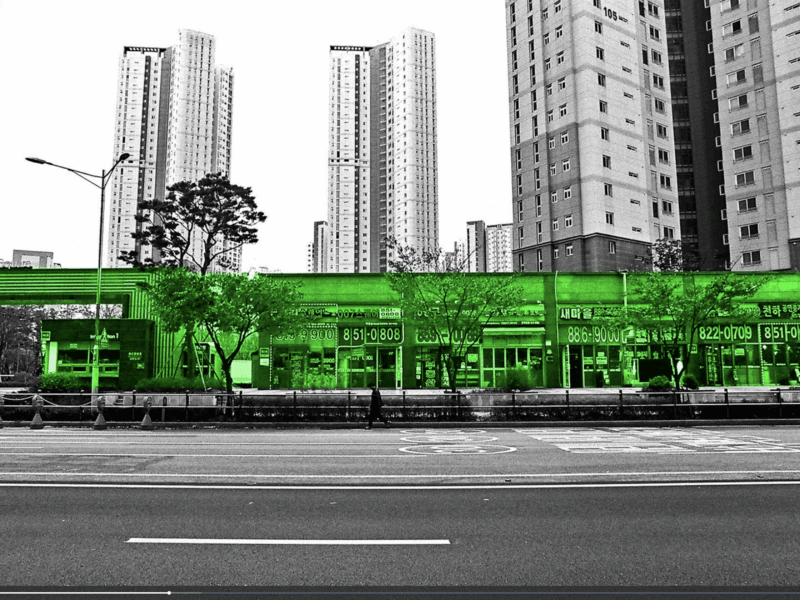
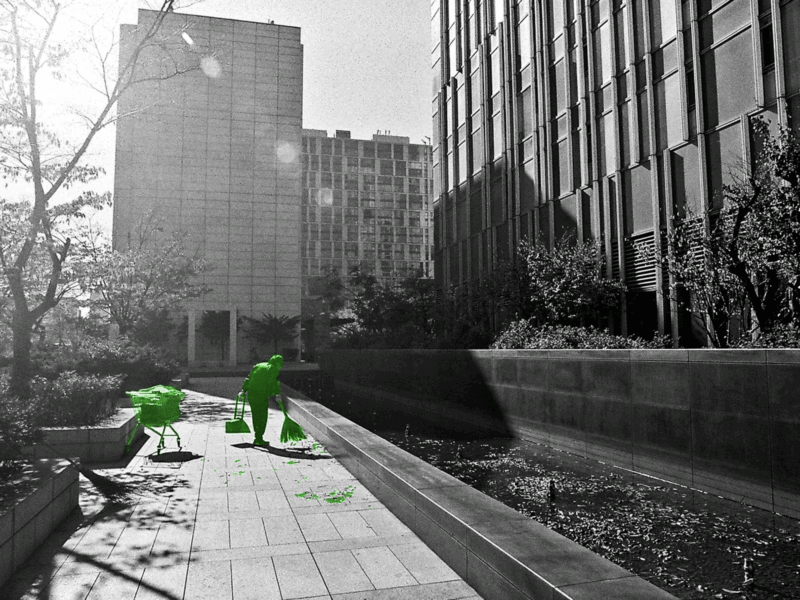
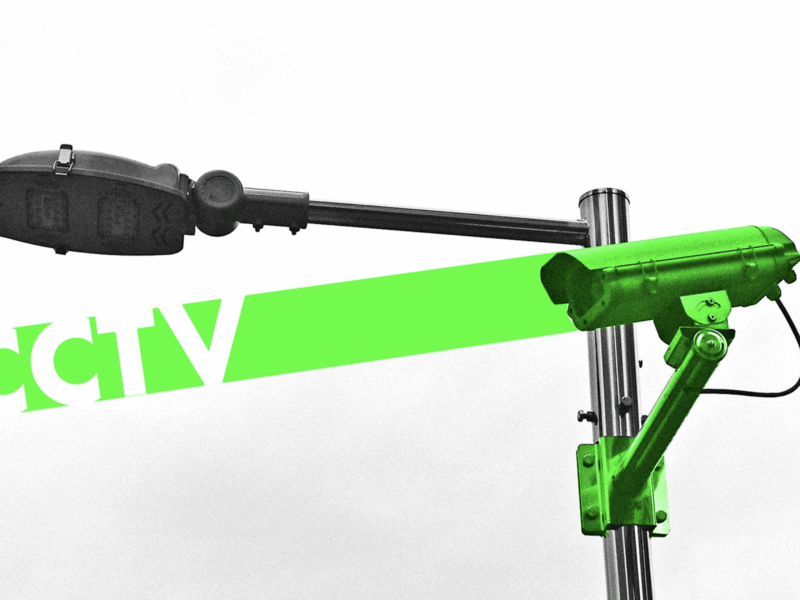
    If urbanization became a hallmark of modernity, then the mediatization of our cities through the ever thicker web of artificial intelligence stands for the late modern transformation. Today the so-called “smart cities” emerge not only via digitalization of existing urban structures but are being built from scratch to integrate the virtual and the real in a way that blurs the traditional boundary between them. In other words, everyday practices and actual cityscapes become ‘augmented’ by a myriad of virtual potentialities. These urban spaces are nowadays being profoundly refigured and with them many human forms of sociability. This ‘refiguration’ literally breaks new ground in places such as the city of Songdo in South Korea. At the same time, it rekindles old modern binary discourses of utopian salvation and dystopian danger. Our project aims not only to document and explain the resulting changes but also to transcend that binary coding. The goal is to work out a rigorous vocabulary in which we can describe in detail how these changes refigure space and time. In order to do that a robust ethnographic approach is needed. Hitherto the scholarly attention prioritized political economy of smart cities, seeing them as reflecting epochal top-down transformations in technology and economy. But once built and populated, cities evince ‘their own logic’ too, one based on a series of contextspecific appropriations of generic technical solutions. This requires to see them as actively inflecting social reality. Combining sociological and architectural approaches to urban planning and city life, our team addresses how ‘smart’ urban life actualizes itself and why it matters.

    DFG Fund, 2017-2020

    PI
    Prof. Jörg Stollmann, Technische Universität Berlin, Institut für Architektur / Prof. Dr. Martina Löw, Technische Universität Berlin, Institut für Soziologie

    Project Staff
    Dr. Timothy Pape
    Dr. Dominik Bartmanski
    Seonju Kim

    Student Staff
    Kayoon Kim
    Adi Cohen
    Yong-Ha Kim

    Photo Credits:
    Eingang NC Cube Shopping Mall, ©Jörg Stollmann