Data Territories: Lübbenau
Seminar 26/27
Teaching
Digital infrastructure is reshaping the relationship between settlements, labour, energy systems, and the territories that support computation. In Atlas of AI (2021), Kate Crawford describes data centres as “non-descript” objects, “out of sight and abstracted away,” with their environmental impact largely invisible – contrary to the visible smokestacks of coal-fired power stations. AI data centres are increasingly located in rural landscapes while serving metropolitan regions, creating new demands on land, water, electricity, and infrastructure. These enclosed objects offer few permanent jobs, have a significant impact on the environment and face growing public opposition.
What changes when a small town becomes part of the physical infrastructure of the digital age? How are local economies and collective memory affected as computation becomes part of the territory with a long history of energy production? What spatial conditions emerge when historical energy systems, water landscapes, tourism, and digital infrastructures coexist within the same territory?
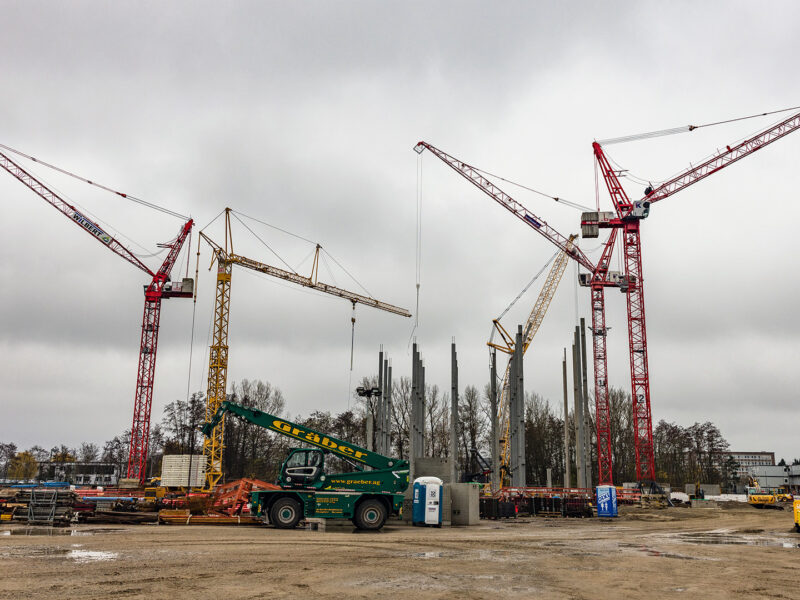
The urban design studio uses Lübbenau as its case study. Lübbenau is located approximately 80 km from Berlin in the Brandenburg region. The town is known as an entry point to the Biosphere Reserve Spreewald, where its canal system supports a tourism economy. The Spreewald’s canal system is an infrastructural landscape developed over centuries to manage water, mobility, and agriculture. Energy infrastructures of lignite extraction and coal-fired power generation transformed the region in the 20th century. The construction of an €11 billion AI data centre on the site of the former power plant is the latest in a line of Lübbenau’s successive yet coexisting infrastructures – one that, unlike the canal landscape it neighbours, is enclosed and inaccessible to the public.
This history of overlapping infrastructures gives the studio its starting point. After the research phase, students will develop design proposals and spatial strategies addressing landscapes, infrastructure, buildings, or public space. The studio asks how digital infrastructures transform spatial relationships with the territories that host them.
Team: WiMi Iva Baljkas Pick / Lecturer Zlatko Nikolic
(fig: Kräne stehen auf einer Baustelle für das neue Schwarz Digits Rechenzentrum. Auf dem Gelände des ehemaligen Kraftwerks Lübbenau soll eines der größten und nachhaltigsten Rechenzentren in Deutschland entstehen. +++ dpa-Bildfunk +++)