Articles in

    SFB 1265 Re-Figuration of Spaces, Phase 3

    B03 Multiple Encapsulations

    Research

    Gated Communities, Artistic Enclaves and Child-free Spaces

    In the first funding phase of the CRC 1265, subproject B03 investigated the refiguration of spaces using the Korean smart city Songdo as a case study. It became evident that refiguration there results in homo-geneous settlement forms and a digitalization concept geared towards the interests of the middle class. In the second funding phase, it was possible to show how the implementation of this urban apartment housing policy as a spatial form of refiguration also gives rise to protest movements and alternative, queer ways of living. In both funding phases, we observed strategies of encapsulation of the groups un-der study within digitally controlled special spaces, staged through thresholds. These encapsulations os-tensibly aim to increase security and reduce complexity. In the third funding phase, we pursue the goal of synthesizing and generalizing our findings. We ask how built-spatial and social structures of encapsulation contribute both to processing refiguration and to driving it further in the form of social polarization. This also raises the question of the porosity of these capsules, first through digital networking and, second, through services. In addition to secondary analyses of existing data and cross-sectional analyses across various subprojects within the CRC, in-depth studies will be conducted in South Korea on two phenomena: the establishment of child-free public spaces in Korean cities, and the promotion of artist settlements in peripheral villages. The project’s long-term study of the development of gated communities in South Ko-rea will also be continued during the third phase. By examining different as well as similar forms of en-capsulation, we expect to gain insights into their conditions of emergence, the nature of their material-digital thresholds, and their relevance. Furthermore, relational studies are planned in Brazil and Switzer-land. The subproject combines urban design and sociological methods, employing participant observati-on, hybrid mapping, and semi-structured interviews.

    DFG Fund, 2026-2029

    PI

    Prof. Jörg Stollmann, Technische Universität Berlin, Institut für Architektur / Prof. Dr. Martina Löw, Technische Universität Berlin, Institut für Soziologie

    Project Staff

    Jae-Young Fröhlich-Lee
    Sangwon Chae

    Student Staff

    Ara Song

    Former Project Staff

    Dr. Sung Un Gang
    Dr. Timothy Pape
    Dr. Dominik Bartmanski
    Seonju Kim
    Kayoon Kim
    Adi Cohen
    Yong-Ha Kim

    Photo Credits:
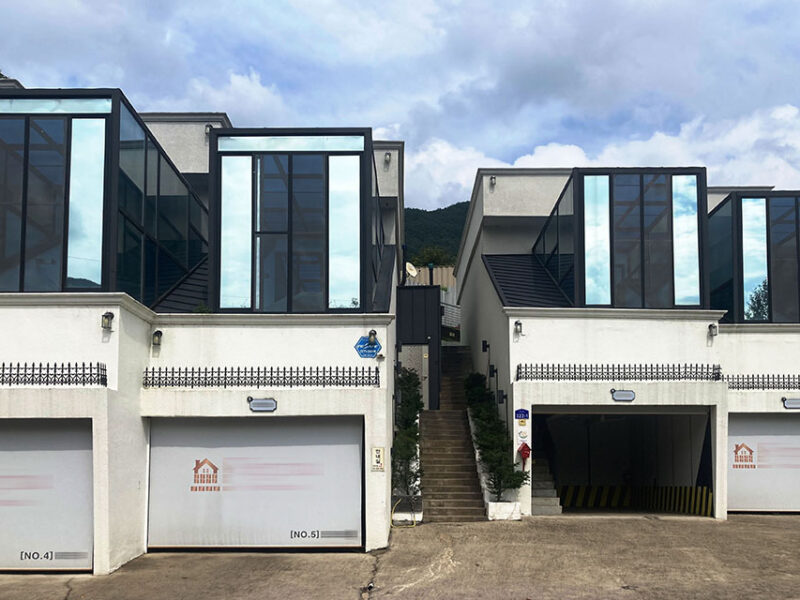
    Luxury gated residency in a rural area in South Korea, © Jae-Young Lee-Frölich
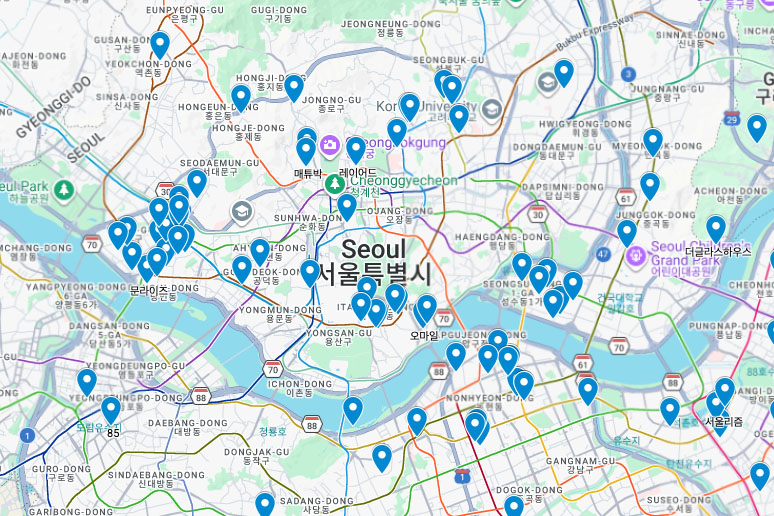
    “YesNo Kidzone Map”, public Google map made by an anonymous user (Screenshot)
    SFB 1265 Re-Figuration of Spaces, Phase 3

    A07 Space of Nature

    Research

    Conflicts over Botanical Knowledge in the Case of (Trans)Atlantic Rainforests (Brazil and Great Britain)

    Subproject A07 investigates conflicts surrounding knowledge about biodiversity conservation against the backdrop of the dramatic increase in the extinction of non-human life on Earth. As a paradigmatic modernist regime that has historically determined the spatial organization of humans and non-human entities, conservation has been massively destabilized since the 1960s by contemporary forces, changing climatic conditions, efforts to decolonize (knowledge) and developments in digitalized biotechnology.

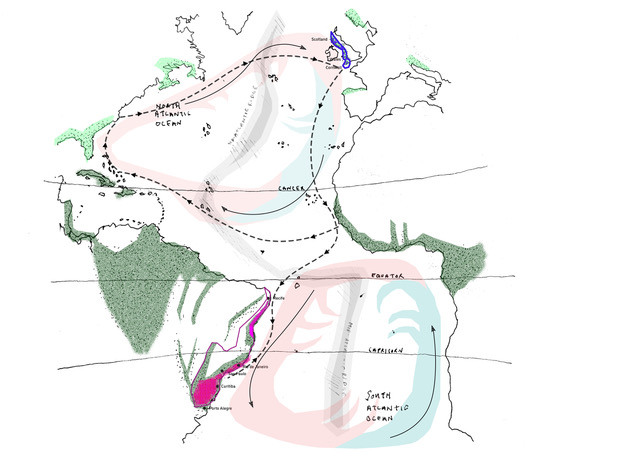
    The subproject adopts a spatial perspective on this existential planetary problem, examining the refiguration of spaces in relation to the fragmented transatlantic forests stretching along the Atlantic Ocean coastline, which has been shaped by imperialism and colonial expansion, and examines the refiguration of spaces in this context. Using an interdisciplinary design research approach that bridges sociology and architecture and combines multi-sited ethnography with expert interviews and hybrid mapping, the subproject explores how transatlantic forests and the subjectivities of nature custodians (including park rangers, Indigenous Guaraní leaders, and IUCN staff) are co-constituted within spatial conflicts over conservation knowledge. Taking Brazil and the United Kingdom as case studies, this research project asks: Which knowledge conflicts challenge the stability of the modern conservation regime, and what effect do these conflicts have on the ongoing co-constitution of spaces of nature and the subjectivities of nature custodians in transatlantic forests?

    The problem of biodiversity loss not only raises the question of the significance of biological knowledge for conservation but also highlights a socio-political and spatial issue – namely, the struggle over who determines how human and non-human life on the planet is spatially ordered and reorganized. By investigating the spatialization of conflicts within conservation regimes, the subproject aims to reveal how botanical knowledge is materialized and reproduced within spaces of nature. Overall, the project intends to capture processes of spatial refiguration in which hegemonic epistemologies of the Global North are being challenged by more diverse forms of knowledge (e.g. local, traditional, subaltern, and artisanal forms).

    PI
    Dr. Jamie-Scott Baxter
    Dr. Séverine Marguin, Technische Universität Berlin, Institut für Soziologie

    DFG Fund, 2026-2029

    Student Staff
    Maria Leticia Bordignon Fogaca