All Articles

    DAAD Planetability Phase 2

    Planetary Health and Multispecies Cohabitation

    Research

    Integrating Planetary Health and Multispecies Cohabitation in Urban Design and Research
    Building on the foundations laid in phase 1, the follow-up project “Planetability: Integrating Planetary Health and Multispecies Cohabitation in Urban Design and Research (Phase 2)” continues to develop a robust interdisciplinary network of junior and senior scientists from Brazil and Germany cutting across the life, engineering, social, and spatial sciences. Collectively, our aim is to advance and promote a new research and action field that we call “planetability”. This combines three overlapping and interlinked dimensions: planetary health, planetary thinking, and planetary transformations, where each dimension fills a gap and enriches the others. For example, the emerging field of planetary health, which is well-represented in contemporary Brazilian debates and emphasises the interconnection of human and environmental health under climate change, is complemented by advanced critical theoretical work on multispecies cohabitation and contemporary urban and spatial theory currently being developed in Berlin – we refer to this as planetary thinking. The uniqueness of our approach empirically considers the social and spatial transformation of fragmented urban natures through the theoretical and methodological lens of human and nonhuman health relations. In global health research, the category of “environment” is all too often reduced to a determinant of human health. In our framework, the environment is opened up to reveal the multiple species and their health relations, eff ects, and outcomes that constitute it; in this way, we place human and nonhuman health on equal footing in the constitution of urban nature space. Our approach can be thought of as trans-scalar, which means we aim to examine how the planetary is inscribed into specific urban sites and therefore, how urban places, subjects, and communities, understood from the perspective of their multispecies urban health relations, are interlinked across the planet. In this way, our research is comparative, in that it seeks out the diff erences, connectivities, and shared histories between unevenly urbanised transatlantic spaces in Germany, São Paulo, and Porto Alegre. Our primary goal in phase two is to advance this mission by consolidating binational relations, supporting junior scientists develop research findings, and submitting a high-value international research proposal.

    PI: Prof. Dr. Jamie Scott Baxter

    SFB 1265 Re-Figuration von Räumen, Phase 3

    B03 Multiple Einkapselungen

    Research

    Gated Communities, Kunstenklaven und kinderfreie Räume

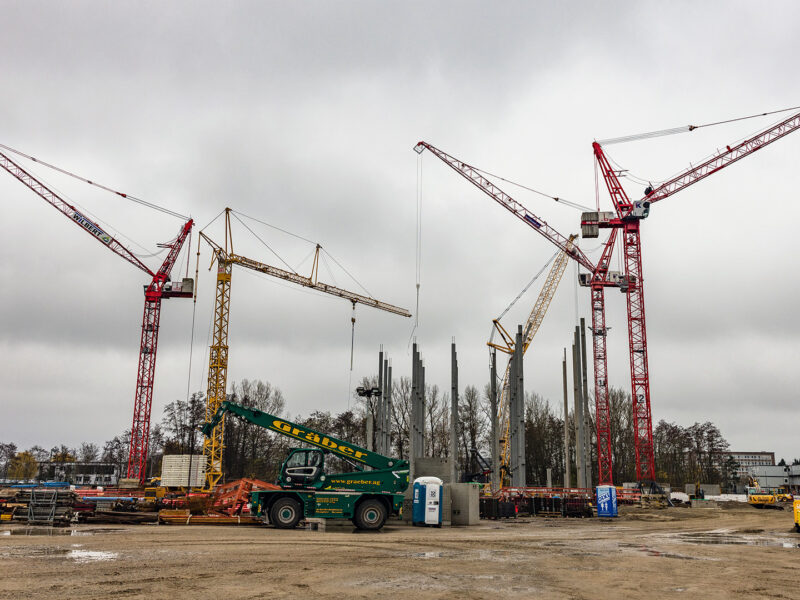
    In der ersten Förderphase des SFB 1265 hat das Teilprojekt die Refiguration von Räumen anhand der koreanischen smart city Songdo untersucht. Es zeigte sich, dass Refiguration dort in homogene Siedlungsformen und ein an den Interessen der Mittelschicht orientiertes Digitalisierungskonzept mündet. In der zweiten Förderphase konnte hergeleitet werden, wie mit der Durchsetzung dieser urbanen Apartmenthauspolitik als räumlicher Refiguration auch Protestbewegungen und alternative, queere Lebensformen entstehen. Wir beobachteten in beiden Förderphasen Strategien der Einkapselung der untersuchten Teilgruppen in digital kontrollierten, über Schwellen inszenierten Spezialräumen. Ziel der Einkapselungen ist es, Sicherheit vermeintlich zu erhöhen und Komplexität zu reduzieren. In der dritten Förderphase verfolgen wir das Ziel der Synthetisierung und Generalisierung der Ergebnisse. Wir stellen die Frage, wie baulich-räumliche und soziale Strukturen der Einkapselung sowohl dazu beitragen, Refiguration zu verarbeiten als auch in Form gesellschaftlicher Polarisierungen Refiguration weiter vorantreiben. Dies impliziert darüber hinaus die Frage nach der Porosität der Kapseln, erstens durch digitalisierte Vernetzung und zweitens über Dienstleistungen. Neben Sekundär-analysen vorliegender Daten und Querschnittsanalysen über verschiedene Teilprojekte im SFB sollen an zwei Phänomenbereichen vertiefende Erhebungen in Südkorea erfolgen: die Durchsetzung kinderfreier öffentlicher Räume in koreanischen Großstädten und die Förderung der Ansiedlung von Künstler*innen in peripheren Dörfern. Die Entwicklung von gated communities soll in Südkorea als Langzeitbeobachtung ebenfalls in der dritten Phase weitergeführt werden. Von der Untersuchung differenter und ähnlicher Formen der Einkapselung erwarten wir Aufschluss bezüglich ihrer Entstehungsbedingungen, der Art ihrer materiell-digitalen Schwellen und ihrer Relevanz. Ferner sind relationierende Erhebungen in Brasilien und in der Schweiz geplant. Das Teilprojekt verknüpft städtebauliche und soziologische Methoden. Eingesetzt werden teilnehmende Beobachtungen, hybrid mapping und leitfadengestützte Interviews.

    SFB 1265 Re-Figuration von Räumen, Phase 3

    A07 Naturräume: Konflikte um botanisches Wissen am Beispiel der (trans)atlantischen Wälder

    Research

    Das neue Teilprojekt A07 untersucht Konflikte um das Wissen über Biodiversitätsschutz vor dem Hintergrund des dramatisch zunehmenden Aussterbens nicht-menschlichen Lebens auf der Erde. Der Naturschutz als paradigmatisches-modernistisches Regime, das historisch bestimmt hat, wie Menschen und nicht-menschliche Entitäten räumlich organisiert sind, wird seit den 1960er Jahren durch zeitgenössische Kräfte sowie sich verändernde klimatische Bedingungen, Dekolonisierungsbestrebungen (des Wissens) und Entwicklungen in der digitalisierten Biotechnologie massiv destabilisiert.

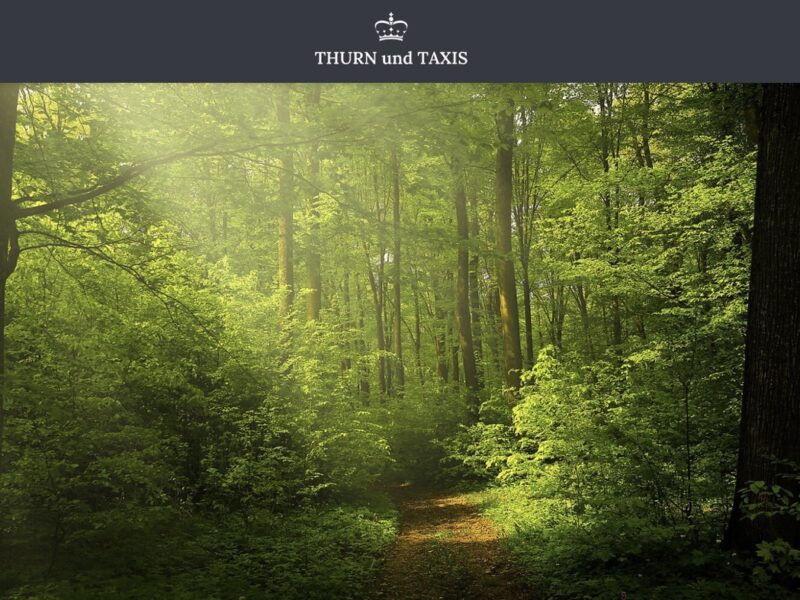
    Das Teilprojekt fokussiert dieses existenzielle planetarische Problem aus einer räumlichen Perspektive in Bezug auf die fragmentierten transatlantischen Wälder, die sich entlang der von Imperialismus und kolonialer Expansion geprägten Küstenstreifen des Atlantischen Ozeans erstrecken, und untersucht die Refiguration von Räumen in diesem Kontext. Mit dem Ansatz einer interdisziplinären Designforschung zwischen Soziologie und Architektur, die eine multi-sited-ethnography mit Expert*inneninterviews und hybrid mapping kombiniert, untersucht das Teilprojekt, wie die transatlantischen Wälder und die Subjektivitäten von nature custodians (u. a Parkrangers, indigene Guaraní Leaders, IUCN-Mitarbeitende) in Raumkonflikten um Naturschutzwissen ko-konstituiert werden. Anhand der Beispiele Brasilien und das Vereinigte Königreich werden folgende Fragen untersucht: Welche Wissenskonflikte fordern die Stabilität des modernen Naturschutzregimes heraus? Und wie wirken sie sich auf die laufende Ko-Konstituierung von Naturräumen und die Subjektivitäten von Naturwächter*innen in transatlantischen Wäldern aus?

    Das Problem des Biodiversitätsverlusts wirft nicht nur die Frage nach der Bedeutung des biologischen Wissens für den Naturschutz auf, sondern markiert zugleich auch eine soziopolitische und räumliche Frage sowie einen Machtkampf darüber, wer bestimmt, wie menschliches und nicht-menschliches Leben auf dem Planeten räumlich geordnet und neu organisiert werden. Durch die Untersuchung der Verräumlichung von Konflikten in Naturschutzregimen will das Teilprojekt aufzeigen, wie botanisches Wissen in Naturräumen materialisiert und reproduziert wird. Insgesamt zielt das Projekt darauf ab, Prozesse der Refiguration zu erfassen, in denen hegemoniale Epistemologien des Nordens durch vielfältigere Formen des Wissens (lokal, traditionell, subaltern, artisanal usw.) herausgefordert werden.

    Beyond Modernism - Vernacular Use(s) of Hansaviertel

    MA Design Studio

    Teaching

    We will deepen our understanding of the so-called “existing” – a fertile ground for every project. Alongside historical research, planning, and market analysis to grasp the context, we will conduct intensive fieldwork in order to: 1) understand the site in its materiality, immaterial dimensions, and ontology, and 2) make conscious and well argued decisions regarding how the design project engages with the existing. This reflexion will be supported by readings on philosophy of the vernacular, new materialism and critical heritage.
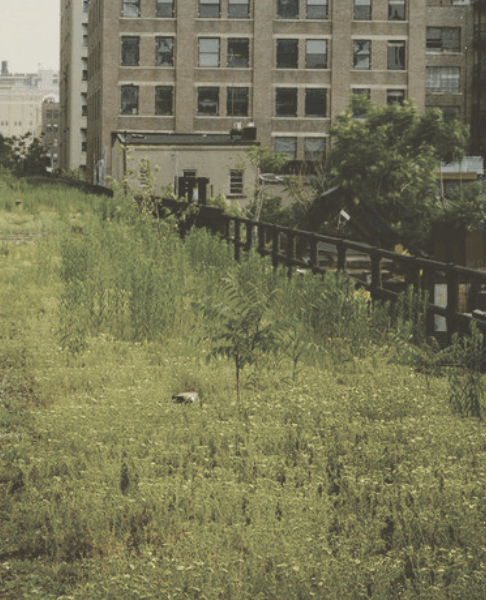
    Hansaviertel and its surroundings (IBA 57, the northern historic quarter, and northwest of Tiergarten) will serve as our field of inquiry. This heritage site is, in many respects, a true palimpsest. Successively a hunting reserve, a mundane fragment of the city, a field of ruins, and later the site of an international architectural exhibition, it has not undergone major physical transformation for nearly seventy years. Life has settled between memory, modernist heritage, and everydayness. People inhabit and continue to transform the place through the sedimentation of traces of their uses – in both material and immaterial forms.
    Within this context, we will ask: what should be preserved, transformed, or erased to make space for the vernacular practice within a site strongly marked by institutional transformation and market forces? To address this question, we will rely on the tensions between three positions toward history: monumental, antiquarian and critical.

    PiV offered by Fachgebiet Bildende Kunst:
    In connection with the studio Beyond Modernism – Vernacular use(s) in Hansaviertel, an artistic research project using the medium of film will be conducted.
    Intertwining archival images with footage captured on site during fieldwork, this research will constitute a pivotal moment within the studio, during which design project ideas will be developed between analysis and speculation through narratives that engage with the materiality of the site and the everyday practices of its inhabitants.

    Team: Prof. Jörg Stollmann / WiMi Jeanne Lacour

    IfA EXPO 2026

    Seminar SS26

    Teaching

    This year, the IfA Expo returns as the annual exhibition of student work, bringing together all departments of the institute. Through the exhibition, we aim to create a platform where students present their projects and gain insight into the diverse work developed across our institute. The exhibition opens a shared space to explore design, research, and experimentation, inviting visitors to immerse themselves in the many fields that shape architecture at the IfA. The exhibition weekend concludes with a summer gathering that brings together students, teachers, and guests to reflect on and celebrate the semester.

    Team: IfA Kollektiv & Prof. Jörg Stollman

    Is Typology a Scam?

    Seminar SS26

    Teaching

    This semester, the seminar wants to reflect not only on types and their appropriation and transformation, but on typology as such and the way typolegical thinking is taught, theorized, and developed in the Master Architecture Typology program and beyond. We will ask: “If and how typological thinking as it is taught in the M-Arch-T affeets our thinking about architecture and our future potential practice.”

    Team: Prof. Jörg Stollmann, Beyza Uysal, Tomás Martínez

    Mapping Through the Looking Glass

    Seminar SS26

    Teaching

    Berlin is widely regarded as one of the queer capitals of the world. Maps produced by the City of Berlin or by Siegessäule reinforce this claim through the marking of the city’s milestones. These spatial representations of queerness are largely oriented toward the tourism industry and function as a form of urban branding that caters to market demands. As such, they often carry ambiguous political meanings for queerness, serving neoliberal regimes of spatial production while reinforcing forms of homonormativity. Queerness today can be understood through tensions between the “neoliberal queers” of the present and the radical queer movements of the past. These positions frequently exist in conflict and contradiction rather than within a single coherent queer space. Such fractures can already be observed in Berlin itself: in the existence of two pride parades, in the contrasts between lesbian and gay housing projects, and in the spatial tensions between queer centers and anti-queer peripheries.
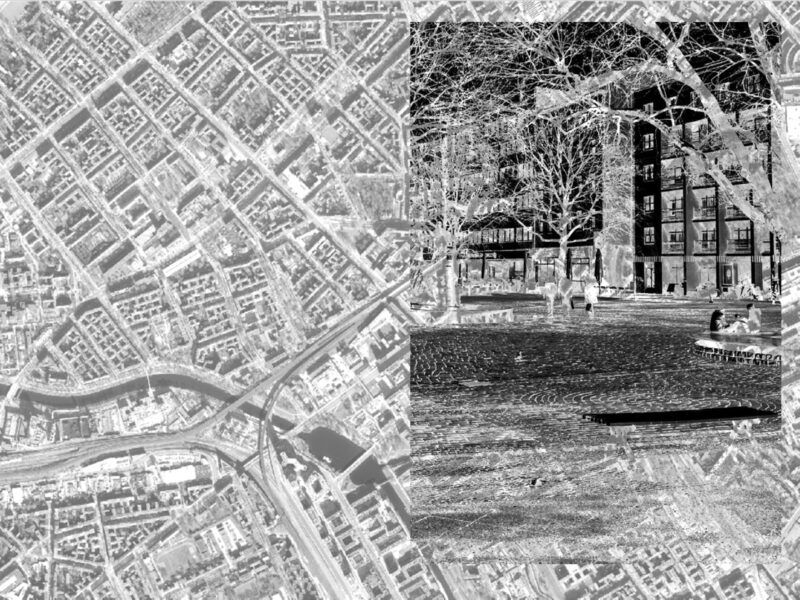
    This seminar aims to address the complexities of queer representation in a more conflictual yet intersectional manner. Its objective is to investigate how urban domains such as housing, leisure, labor, public space, nature, culture, and infrastructures of care might be presented as queer counterparts to normative spatial orders, and to examine the spatial and systemic forces that enable or constrain these processes. In this sense, the seminar employs research methods and various forms of mapping in order to produce a publication that questions the dominant narratives often reproduced by existing “queer maps” of Berlin and instead asks a broader question: Is Berlin a queer city?

    Team: Prof. Jörg Stollmann, Veljko Marković

    Colloquia & Office Hours

    SS 26

    Teaching

    OFFICE HOURS
    1_Fr 24.04. – 9.30-11.30 presence/hybrid
    2_Fr 22.05. – 9.30-11.30 online
    3_Fr 19.06. – 9.30-11.30 presence/hybrid
    4_Fr 10.07. – 9.30-11.30 presence/hybrid

    MASTER COLLOQUIUM
    1_Thur 16.04. – 16.00-18.00 presence/hybrid
    2_Thur 07.05. – 16.00-18.00 presence/hybrid
    3_Wed 03.06. – 16.00-18.00 presence/hybrid
    4_Thur 18.06. – 16.00-18.00 presence/hybrid
    5_Thur 09.07. – 16.00-18.00 presence/hybrid

    PHD COLLOQUIUM
    1_Tue 12.05. 9.30-11.30 online
    2_Tue 09.06. 9.30-11.30 online
    3_Tue 30.06. 9.30-11.30 online
    4_Tue 04.08. 9.30-11.30 online

    To attend the office hours, please book your individual appointment via DFN Terminplaner.

    For „(online)“, please use Zoom link.